You may have heard of dental crowns and fillings to address cavities and dental decay. However, there are lesser-known alternatives such as dental inlays and onlays. Typically, fillings are employed to manage small cavities, while crowns are used for more severe decay or larger fractures. In cases where fillings are inadequate and crowns are excessive, dental inlays and onlays are utilized. These solutions offer a more substantial repair than fillings but are less invasive than crowns, which may require reshaping of the teeth.
What are Inlays and Onlays
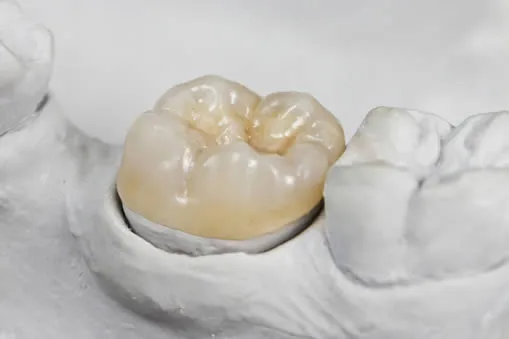
Dental restorations such as inlays and onlays are an essential part of modern dentistry. When a tooth is damaged due to decay or trauma, it often requires a restoration to restore its function and aesthetics. Inlays and onlays are two types of indirect restorations that are used to repair a damaged tooth. These restorations are custom-made in a dental laboratory and are designed to fit precisely into the cavity of the tooth. Inlays and onlays are often considered an alternative to traditional dental fillings and are commonly used for restoring molars and premolars that have suffered moderate to severe damage. They offer excellent durability, strength, and aesthetic value, making them an ideal choice for patients who want to preserve their natural teeth.
What is the Difference Between Inlays and Onlays?
Inlays and onlays serve to repair tooth decay by filling in cavities and hollows in a tooth. An inlay is used to fill spaces between the cusps, while an onlay can be used for larger areas, including the cusps themselves. Although they function similarly to crowns, they do not cover the entire tooth surface. Inlays and onlays are constructed from the same materials and perform the same task, but they protect different regions of the tooth to ensure proper care for tooth decay.
How Long Do Inlays and Onlays Last?
Inlays and onlays are highly durable and long-lasting dental solutions, with an expected lifespan of 5 to 30 years. However, dental professionals cannot guarantee their longevity due to factors like wear and tear and lack of care. Proper dental hygiene habits such as brushing and flossing, along with follow-up visits to the dentist, are crucial to maintaining the stability and health of inlays and onlays. Patients should also take measures to reduce wear and tear, such as using nightguards to prevent teeth grinding and avoiding hard or chewy foods that may damage the material. While there is no set timeframe for their lifespan, the longevity of inlays and onlays depends on overall oral health and proper care.
Is an Onlay Better Than a Dental Crown?
The main contrast between an onlay and an inlay lies in their coverage area. While an inlay fills in the spaces between the cusps, an onlay can also cover the cusps of the tooth. Although they may seem similar to dental crowns, they serve different purposes. Dental professionals use onlays when a less aggressive restoration is required to preserve more of the tooth’s structure, whereas crowns cover the entire tooth, necessitating significant reshaping. The difficulty in obtaining a suitable onlay underscores the importance of the dentist’s skill and expertise. Therefore, neither is inherently superior, and our dentist will recommend the most suitable option for the situation.
Are Inlays Better Than Fillings?
Similar to the ongoing debate between onlays and crowns, determining whether inlays or fillings are better involves considering multiple factors. Generally speaking, inlays are superior because they can fill larger cavities and are more durable than fillings. The amalgam in fillings can expand and contract due to temperature changes, which can cause cracking in the filling or even the tooth itself. Inlays are custom-made from an impression, which allows them to fit perfectly into the cavity and strengthen the tooth. In some cases, they can increase the tooth’s ability to handle up to 75% more chewing force than before the decay.
However, fillings have their own benefits for many patients, particularly the speed at which they can be placed. In contrast to inlays, fillings can typically be completed in just one visit, as the materials are readily available in the office. They are also less expensive and more widely covered by insurance. Ultimately, while inlays may perform better than fillings, their higher cost reflects their superior performance.
What are the Different Types of Inlay and Onlay?
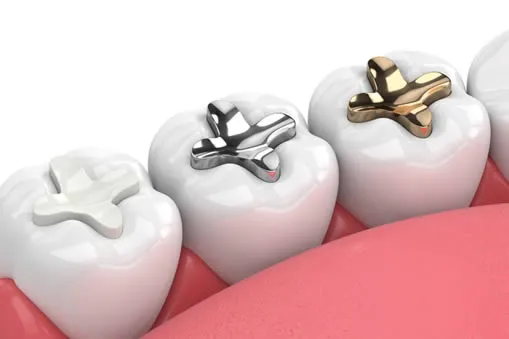
- Porcelain inlays and onlays: Porcelain is a popular material for inlays and onlays because it is strong and durable, and can be color-matched to your natural teeth.
- Composite resin inlays and onlays: Composite resin is a tooth-colored material that is used for both inlays and onlays. It is a more affordable option than porcelain, but may not last as long.
- Gold inlays and onlays: Gold is a durable and long-lasting material that has been used for dental restorations for many years. Gold inlays and onlays are custom-made and can be very expensive.
- Ceramic inlays and onlays: Ceramic is a durable material that can be color-matched to your natural teeth. It is a popular option for patients who want a restoration that is both strong and aesthetically pleasing.
- Hybrid inlays and onlays: Hybrid restorations are made from a combination of materials, such as porcelain and metal, to provide a strong and durable restoration that is also aesthetically pleasing.
We will work with you to determine the best type of inlay or onlay for your specific needs and budget.